
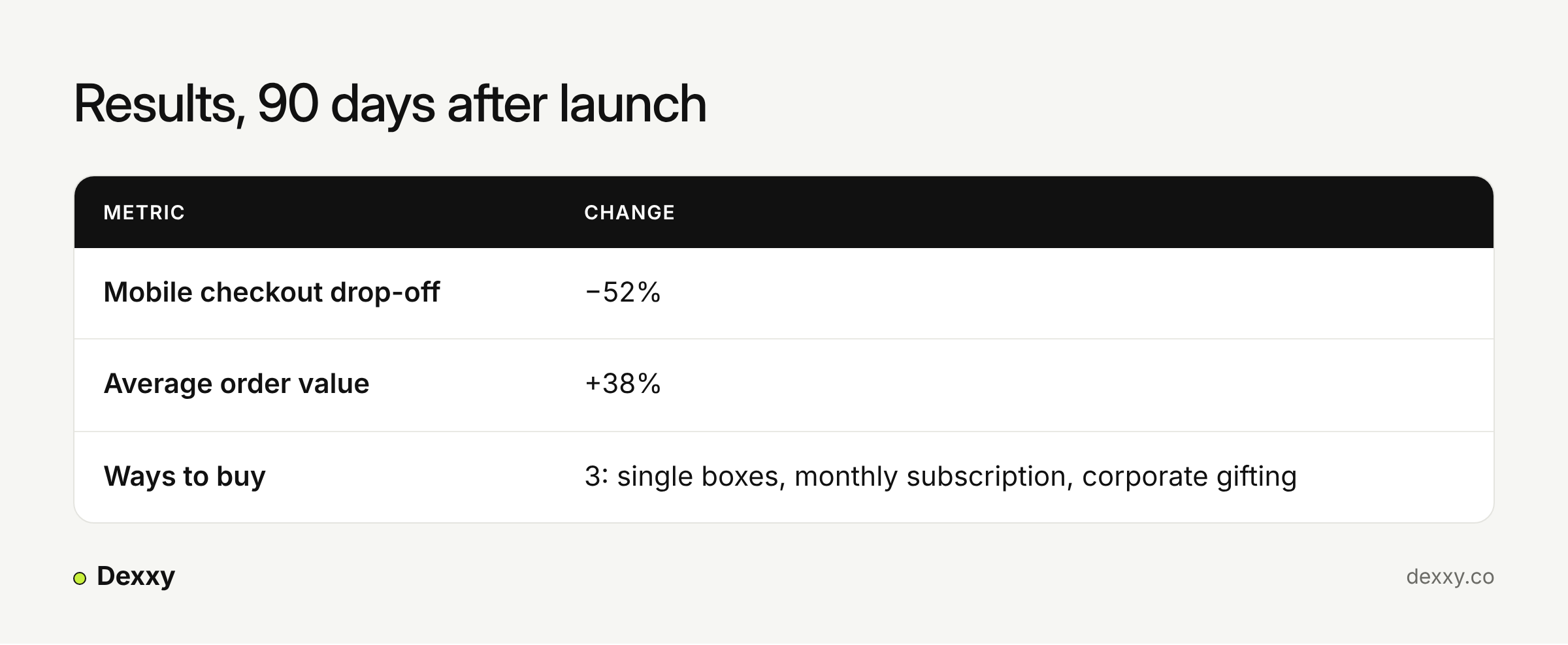
A luxury chocolate atelier's Shopify store went from a broken template to a clear purchase funnel: −52% mobile checkout drop-off and +38% order value in 90 days.
In this article+
We cut a chocolate atelier's mobile checkout drop-off by 52% by rebuilding its Shopify store around one clear purchase path, adding a smart cart drawer that recovers abandoned carts, and giving every product a reason to cost what it does. Average order value rose 38% over the same period. Both figures compare the 90 days after launch with the same 90 days a year earlier.
The starting point
The client is a chef-led chocolate atelier in Los Angeles. Its founder trained in French pâtisserie from the age of sixteen, and each bonbon is built on a classic French pastry flavor. The product was couture. The store wasn't.
It was an old Shopify store built from a template, and it didn't work well:
- Pages didn't open correctly. The journey broke before it started.
- No real catalog. Shoppers couldn't browse the range the way a chocolate shop invites them to.
- No style, no brand. Nothing on the page explained the craft or justified the price of a single piece.
- One way to buy. No subscription, no gifting, no reason to come back.
We were briefed on a website. In the first workshop it became a question about structure: what is the one thing this brand repeats, and can a Shopify theme carry it without flattening it?
What we changed
1. A store that tells the story
We designed the full look and feel and the purchase funnels from scratch. The homepage introduces the chef, the collections and the approach. Product pages connect each bonbon to the French pastry that inspired it, so the price makes sense before anyone asks.
2. One straightforward purchase path
The core path — collection, product, cart, checkout — was simplified until there was nothing to get lost in on a phone. Several pages were built to double as landing pages for the brand's ad campaigns, so paid traffic lands on a page made to convert it.
3. A cart that keeps working
We added a Rebuy smart cart drawer: shoppers add to cart without leaving the page, see relevant add-ons and discounts, and get reminded if they leave. Rebuy also runs post-purchase offers. A shipping protection plugin covers the worry every chocolate buyer has about a warm delivery.
4. Email that pays for itself
Klaviyo was set up end to end: email sign-up in exchange for a first-order discount, plus flows that bring shoppers back after they browse or abandon a cart.
5. New ways to buy
The redesign launched revenue paths that didn't exist before:
- A monthly chocolate box subscription, run as a membership club with its own page and logic.
- Corporate and event gifting, with a bundle builder behind it.
- Collections of the week and month, so regulars have a reason to return.
- Partnership products with other brands.
The results
Measured over the 90 days after launch against the same period a year earlier:
The project took 8 weeks: one week of CRO audit and UX research, three of design, four of Shopify development, then ongoing support with content and product updates. The brand now runs its ads to the new landing pages.
What we'd tell any store with the same problem
- Fix the broken journeys first. No redesign beats a page that actually opens.
- Make the cart a drawer, not a detour. Shoppers who stay on the page keep shopping.
- Give people more than one way to buy. A subscription or a gift option often lifts order value more than any button color.
- Build landing pages your ads can use. Paid traffic deserves a page made for it.
- Measure against the same period last year, not last month, to keep seasonality out of the result.
FAQ
What made the biggest difference to checkout drop-off? Most of the change happened before checkout: a clear path from product to cart, a cart drawer with recovery, and pages that build trust on a phone.
Which apps did the store use? Rebuy for the smart cart and post-purchase offers, Klaviyo for email, and a shipping protection plugin. All were set up to match the store's design.
How long did the project take? Eight weeks from the first workshop to launch, followed by ongoing support.
Next step
If your store came from a template and it shows, send us the URL. Start a brief →